Text: 402-773-6276



Can Crooked Teeth Increase Your Risk of Gum Disease? What Omaha Patients Should Know

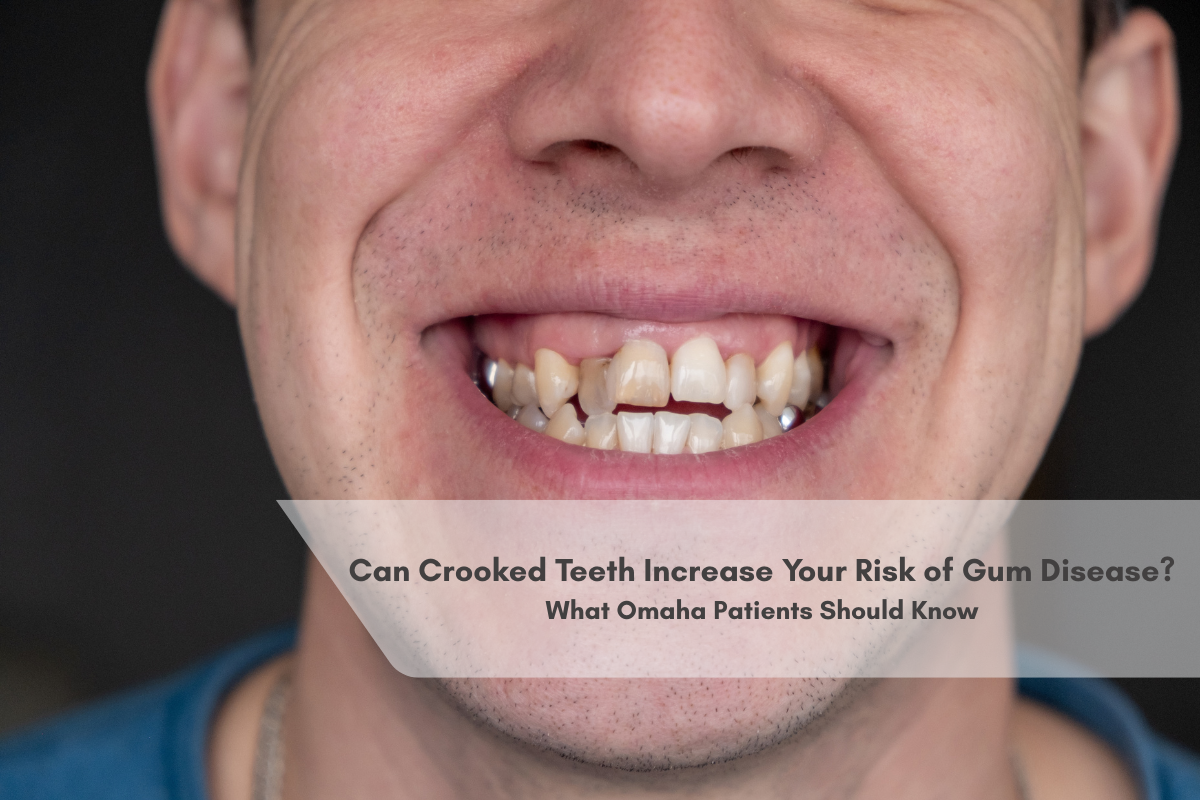
On a normal day in Omaha, it usually starts with something small. A little bleeding while brushing before work in West Omaha. Food getting trapped around crowded teeth after lunch in Millard. Or gums that seem swollen in one spot no matter how carefully someone flosses. Many patients from Elkhorn, Bennington, and nearby communities assume crooked teeth are only a cosmetic issue until gum irritation becomes harder to ignore.
The question we hear more often than many people expect is this: Can crooked teeth actually increase the risk of gum disease? In many situations, the answer is yes. Not because crooked teeth directly cause infection, but because they can create conditions that make healthy gums harder to maintain.
At Discover Orthodontics, Dr. Molly Bodendorfer works with patients who want clear answers before deciding on orthodontic care. Her approach focuses on understanding how alignment affects long-term oral health, bite function, and confidence while helping patients feel informed rather than pressured during treatment decisions. If you have concerns about crowded teeth, gum irritation, or whether orthodontic treatment may help, contact our team at Discover Orthodontics to schedule a consultation and get answers tailored to your smile.
When Crooked Teeth Become More Than a Cosmetic Concern
Many people think of crooked teeth as an appearance issue. If a smile looks fine in photos and there is no pain, it feels easy to postpone treatment.
However, gum disease often develops quietly. In many cases, patients do not notice a problem until they see bleeding, tenderness, gum recession, or persistent bad breath.
The challenge with crowded or overlapping teeth is simple: they create spaces that are harder to clean consistently.
Food debris, bacteria, and plaque tend to collect in tighter areas where toothbrush bristles and floss cannot reach easily. Over time, this buildup can irritate the gums and trigger inflammation.
An experienced Orthodontist in Omaha, patients often trust that alignment problems do not automatically mean someone will develop gum disease. Plenty of people with crooked teeth maintain healthy gums. The issue is risk. When oral hygiene becomes more difficult every single day, the chances of inflammation tend to increase.
Why Gums Often Become Irritated Around Crowded Teeth
Patients often assume bleeding gums mean they brushed too hard. While that can happen, we commonly see another pattern.
The bleeding usually happens in the same hard-to-clean areas repeatedly.
When teeth overlap or rotate, plaque can collect near the gumline without being fully removed. The body reacts to that bacterial buildup through inflammation. Early gum irritation, called gingivitis, may involve:
- Gums that bleed during brushing or flossing
- Puffiness or tenderness in certain areas
- Redness near crowded teeth
- Persistent bad breath that returns quickly
One detail many patients overlook is that gum irritation does not always affect the entire mouth equally. We often see localized inflammation around a few crowded front teeth or tightly spaced molars, while the rest of the gums appear healthy.
That uneven pattern can sometimes signal that alignment is making oral hygiene harder.
“I Brush Every Day, So Why Are My Gums Still Inflamed?”
This is one of the most common frustrations patients describe.
Someone may brush twice daily, floss regularly, and still feel like the same areas stay irritated.
The reality is that brushing habits matter, but access matters too.
If teeth are severely crowded, even motivated patients can struggle to clean effectively. Certain angles become difficult to reach, floss may shred or snag, and bacteria remain trapped longer than expected.
We occasionally see patients who believe they are somehow failing at oral hygiene when the issue is actually mechanical. The positioning of the teeth is making proper cleaning harder.
This becomes especially important for adults who begin noticing gum recession or sensitivity around crowded areas.
What Patients Often Get Wrong About Gum Disease and Alignment
One misconception is that orthodontic treatment should wait until gum problems become severe.
In reality, waiting too long may sometimes make things more complicated.
If gum inflammation progresses into more advanced periodontal disease, bone loss and gum recession may eventually affect treatment planning. That does not mean orthodontic care becomes impossible, but earlier intervention can sometimes create more predictable outcomes.
Another common mistake is assuming braces are purely cosmetic.
Straightening teeth can sometimes improve how effectively someone brushes and flosses. Better access means fewer hiding places for bacteria.
For patients searching for a trusted local Orthodontic care provider, the discussion often shifts from aesthetics to prevention. The real question becomes: Will improving alignment help reduce daily challenges that contribute to gum irritation?
Not Every Patient Needs the Same Type of Treatment
The good news is that orthodontic treatment today is often more comfortable and efficient than many adults expect.
Modern techniques can reduce discomfort, shorten treatment timelines, and decrease how frequently patients need office visits compared with older approaches.
Depending on alignment concerns and gum health, patients may have multiple treatment options available. Some people benefit from traditional braces, while others may qualify for more discreet solutions such as ceramic braces or clear aligners. Mild alignment concerns may sometimes be addressed with removable aligners designed for convenience and flexibility.
During an initial evaluation at Discover Orthodontics, Dr. Molly Bodendorfer carefully examines alignment, bite concerns, and overall oral health before recommending treatment. At our orthodontic office in Omaha, NE, patients can expect a personalized discussion about what treatment may look like, estimated timing, and anticipated costs, so there are fewer surprises later. Our goal is to help patients understand their options clearly and feel confident about the next steps in treatment.
When Gum Symptoms Should Not Be Ignored
Some signs deserve earlier attention, especially if they continue despite good brushing habits.
You may want to schedule an evaluation if you notice:
- Bleeding gums that happen repeatedly
- Swelling around crowded or overlapping teeth
- Food consistently getting trapped in the same areas
- Gum recession around teeth that feel difficult to clean
- Persistent inflammation despite regular dental cleanings
Patients sometimes wait because they assume discomfort needs to become painful before it matters.
But gum disease does not always hurt early on. In many cases, the first warning signs are subtle.
Why Some Mildly Crooked Teeth Still Create Problems
Another misconception is that only severe crowding affects gum health.
Even mild rotations or spacing problems can create cleaning challenges if they occur in the wrong location. Over time, these harder-to-clean areas may contribute to broader oral health concerns, especially if plaque consistently builds up near the gumline.
For example, a slightly rotated lower front tooth may trap plaque repeatedly near the gumline. A bite imbalance may also create extra pressure in certain areas, contributing to irritation over time.
This is why treatment recommendations are not based only on how dramatic a smile looks.
We look at function, hygiene challenges, and long-term health.
Concerned That Crooked Teeth May Be Affecting Your Gums?
If you are noticing bleeding gums, crowded areas that are difficult to clean, or recurring irritation that never seems to fully improve, it may be time for a closer look.
At our practice, Dr. Molly Bodendorfer helps Omaha patients understand whether alignment may be contributing to gum concerns and what treatment options make sense for their situation. Schedule a consultation to get clear answers and a personalized treatment plan built around your goals.
Crooked teeth do not automatically lead to gum disease, but they can create everyday challenges that make healthy gums harder to maintain. When inflammation keeps returning in the same places or cleaning feels difficult, no matter how careful someone is, it may be worth looking beyond brushing habits alone. By understanding how alignment and gum health connect, we can make more informed decisions about protecting long-term oral health.
Frequently Asked Questions
Can crooked teeth directly cause gum disease?
Not directly. Crooked teeth themselves do not create infection, but they can make brushing and flossing more difficult, allowing plaque and bacteria to build up near the gums.
Why do my gums bleed around crowded teeth?
Crowded teeth can trap plaque close to the gumline. When bacteria remain in those areas, the gums often become inflamed and bleed more easily.
Can Invisalign help reduce gum disease risk?
In some cases, yes. Clear aligners may improve tooth positioning, making daily cleaning easier. However, the right treatment depends on your specific bite and alignment concerns.
Is gum disease reversible if caused by crooked teeth?
Early gum inflammation, known as gingivitis, can often improve with professional care and better cleaning access. More advanced gum disease may require additional treatment.
Should I see a dentist or an orthodontist first?
Many patients begin with their general dentist, but an orthodontic evaluation may help identify whether alignment is contributing to ongoing gum irritation.
Are adults too old for orthodontic treatment?
No. Many adults pursue treatment to improve function, comfort, and oral health, not just appearance.
Will straightening my teeth stop gum disease?
Orthodontic treatment can reduce cleaning difficulties, but healthy brushing, flossing, and regular dental visits still matter.
How do I know if my bite is affecting my gum health?
Recurring irritation in the same areas, uneven gum recession, and persistent cleaning challenges may all signal that alignment is contributing.