Text: 402-773-6276



Is Invisalign Right for You? Straight Talk from Your Orthodontist

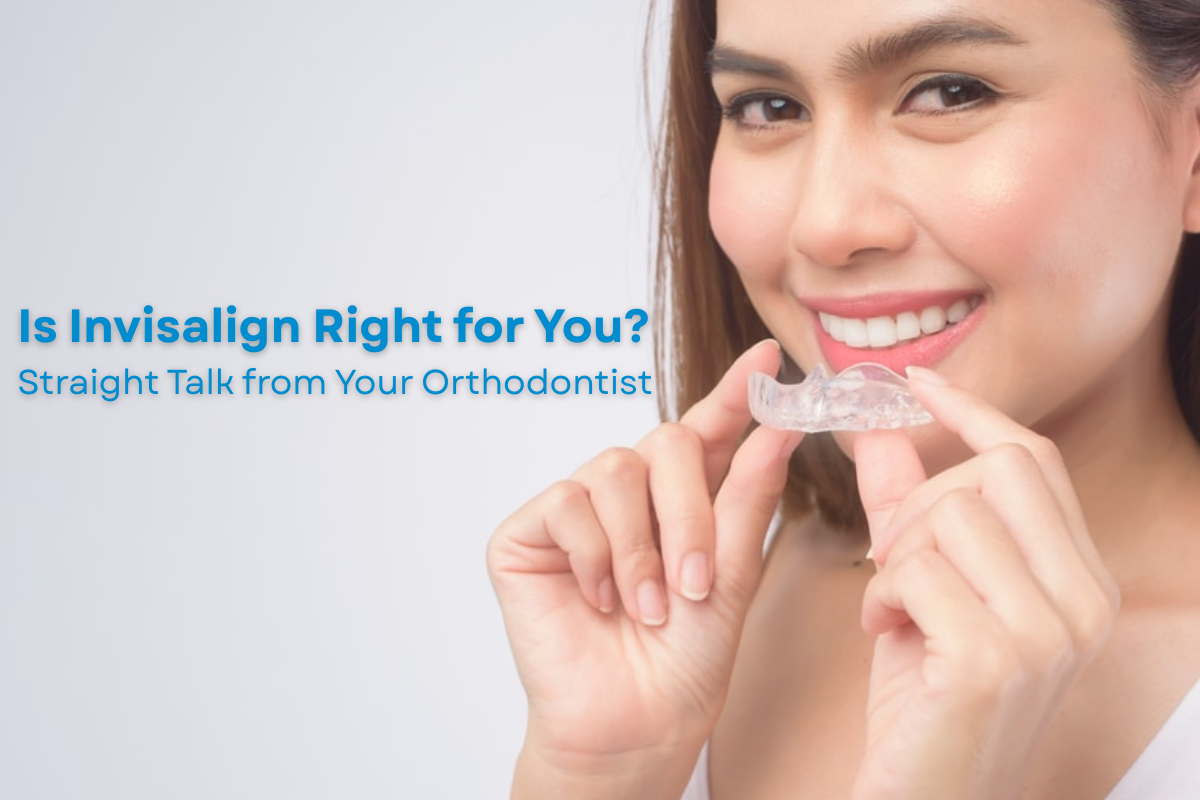
Thinking about straightening your teeth but not sure whether Invisalign is actually right for you? Clear aligners can be an appealing alternative to traditional braces, especially if you want a more discreet treatment option. But choosing Invisalign is not simply a matter of preferring clear aligners over brackets and wires.
At Discover Orthodontics in Omaha, Dr. Molly Bodendorfer understands that every smile has different orthodontic needs. As an orthodontist, she evaluates factors such as tooth alignment, bite, oral health, and treatment goals before determining whether Invisalign is an appropriate option. Her goal is to help patients understand their choices so they can make an informed decision about their orthodontic care.
Choosing an orthodontic treatment is a personal decision, and you do not have to figure it out on your own. Contact Discover Orthodontics to discuss your smile goals and learn whether Invisalign may be a suitable option for you.
So, who is a good candidate for Invisalign? It depends on more than whether your teeth look crooked. Your orthodontic needs, oral health, lifestyle, and ability to follow treatment instructions all play a role. Some patients are excellent candidates for Invisalign, while others may get more predictable results with traditional braces or another treatment approach.
Here is what your orthodontist will consider when determining whether Invisalign may be a good fit for you.
What Makes Someone a Good Candidate for Invisalign?
There is no single age, tooth problem, or lifestyle that automatically makes someone a good or poor candidate. Instead, orthodontists look at several factors together.
Your Orthodontic Concerns Can Be Treated With Aligners
Invisalign can address many common alignment and bite concerns, including:
- Crowded or overlapping teeth
- Gaps and spaces between teeth
- Crooked teeth
- Certain overbite concerns
- Certain underbite concerns
- Some crossbite problems
However, the type of problem is only part of the equation. The severity and complexity of the problem also matter.
For example, Invisalign may be appropriate for one patient with crowding but not another patient with severe crowding or a more complicated bite issue. An orthodontist needs to evaluate how much tooth movement is required and whether clear aligners can achieve that movement predictably.
If you are curious about the types of problems clear aligners may address, you can learn more about dental issues Invisalign can fix.
You Are Willing to Wear Your Aligners Consistently
This is one of the biggest differences between Invisalign and traditional braces.
Because Invisalign aligners are removable, you are responsible for wearing them as instructed. Most patients need to wear their aligners for approximately 20 to 22 hours each day for treatment to progress as planned.
That means taking them out when necessary, such as for eating and brushing, and putting them back in afterward.
Ask yourself:
- Can I remember to wear my aligners every day?
- Will I put them back in after meals?
- Can I follow my orthodontist’s instructions consistently?
- Am I comfortable taking responsibility for my treatment?
If the answer is yes, removable aligners may fit well with your lifestyle.
If you frequently forget things or think you would have difficulty keeping your aligners in for the recommended amount of time, traditional braces may be worth discussing.
Your Teeth and Gums Are Healthy
Orthodontic treatment works best when your mouth is healthy.
Cavities, gum inflammation, or other untreated dental problems may need to be addressed before orthodontic treatment begins. Good oral hygiene also remains important throughout Invisalign treatment.
Because aligners cover your teeth for much of the day, you need to keep your teeth and aligners clean. Brushing and flossing regularly can help reduce the buildup of plaque and food debris.
Your orthodontist may recommend addressing any outstanding oral health concerns before moving forward with Invisalign.
You Want a More Discreet Treatment Option
For some patients, appearance is an important part of the decision.
Invisalign aligners are made from clear material and are designed to be much less noticeable than traditional metal braces. This can be especially appealing to teens and adults who are concerned about how orthodontic appliances will look during school, work, social activities, or everyday life.
Still, appearance should not be the only reason to choose Invisalign. The treatment also needs to be clinically appropriate for your smile.
You Can Keep Track of Your Aligners
There is another practical consideration that is easy to overlook: you have to keep track of your aligners.
Since Invisalign aligners are removable, they can be misplaced or accidentally thrown away. You will also need to follow your orthodontist’s instructions about when to change from one set of aligners to the next.
If you are responsible about keeping track of your belongings and following a treatment schedule, this may not be a major concern. For younger patients, parents may need to help with this part of treatment.
What About Age?
Invisalign is not limited to one particular age group.
Teens and adults may be candidates for clear aligner treatment, and younger patients may also be considered depending on their dental development and orthodontic needs.
Age alone does not determine whether Invisalign is appropriate. Your orthodontist will consider factors such as tooth development, the type of orthodontic correction needed, and your ability to follow treatment instructions.
When Might Braces Be a Better Option?
It is important to understand that Invisalign is not automatically better than braces.
Some orthodontic cases involve complex tooth movements or bite corrections that may be treated more predictably with traditional braces. In those situations, choosing Invisalign simply because you prefer clear aligners may not provide the best treatment outcome.
That does not mean braces are the better option for everyone, either. Invisalign and traditional braces each have advantages, and the right choice depends on your individual smile.
A consultation with an orthodontist can help you understand why one treatment may be recommended over another.
Invisalign vs. Braces: What Should You Consider?
If you are deciding between Invisalign and traditional braces, consider more than appearance.
Invisalign may appeal to you if:
- You want a discreet orthodontic option.
- Your orthodontic concerns can be treated effectively with aligners.
- You are comfortable wearing aligners for most of the day.
- You want the ability to remove your appliance when eating and cleaning your teeth.
- You can consistently follow your treatment plan.
Traditional braces may appeal to you if:
- Your case requires more complex tooth movement.
- You prefer an appliance that stays in place.
- You do not want to be responsible for remembering to wear removable aligners.
- Your orthodontist believes braces can provide more predictable correction for your specific needs.
There is no universally correct choice. The goal is to find the treatment that best matches your orthodontic needs and your ability to follow the treatment plan.
What Are the Downsides of Invisalign?
Invisalign has several advantages, but clear aligners are not completely effortless.
You need to wear them consistently, remove them when eating or drinking certain beverages, clean them properly, and remember to put them back in. Some patients may also experience temporary pressure or discomfort when moving to a new set of aligners.
The aligners are removable, which is convenient, but that convenience also requires responsibility.
Understanding these expectations before treatment can help you decide whether Invisalign fits your daily routine.
So, Is Invisalign Right for You?
You may be a good candidate for Invisalign if your orthodontic concerns can be treated effectively with clear aligners, your teeth and gums are healthy, and you are prepared to wear and care for your aligners consistently.
But there is no reliable way to determine candidacy from a checklist alone. Two people with similar-looking crooked teeth may need completely different treatment approaches because their bite, tooth position, or underlying orthodontic concerns are different.
That is why an evaluation with an orthodontist is important.
At Discover Orthodontics, Dr. Molly Bodendorfer can evaluate your teeth and bite, discuss your smile goals, and explain whether Invisalign or another orthodontic treatment may be appropriate for you.
If you are considering clear aligners in Omaha, visit our orthodontic practice in Omaha, NE to discuss your options and schedule an orthodontic consultation.