Text: 402-773-6276



Can Wisdom Teeth Ruin Your Orthodontic Results? What Patients Should Know

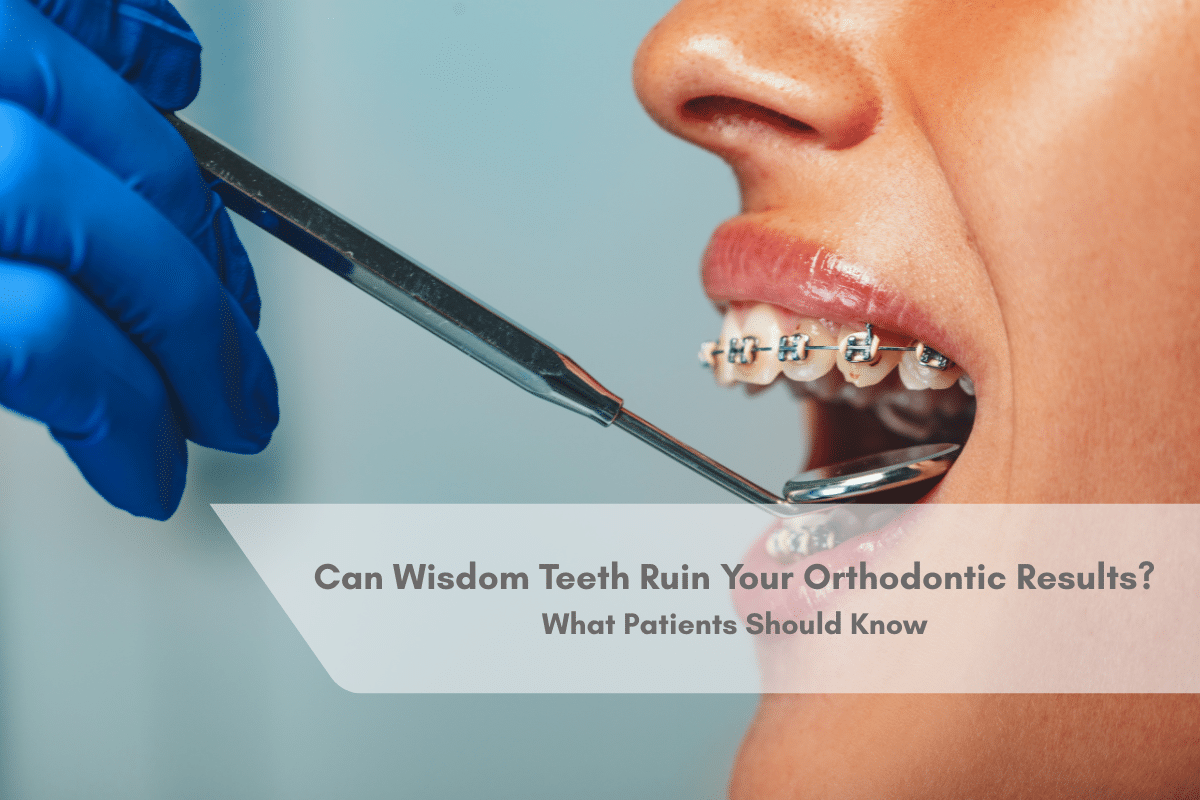
If you’ve invested months or even years into creating a straighter smile, it’s understandable to worry when your wisdom teeth begin to emerge. Many patients across Omaha, Elkhorn, Bennington, Gretna, and nearby communities ask whether these late-developing molars can undo the results of braces or clear aligners. The answer isn’t as simple as yes or no. While wisdom teeth don’t automatically ruin orthodontic treatment, they can contribute to certain oral health concerns that deserve professional monitoring.

About Dr. Molly Bodendorfer
Dr. Molly Bodendorfer is committed to helping patients achieve healthy, lasting smiles through personalized orthodontic care at Discover Orthodontics. She believes in educating patients about every stage of treatment, including how to protect their results long after braces or aligners come off.
Why This Question Comes Up So Often
Many people notice tightness in their back teeth or mild crowding around the same time their wisdom teeth begin developing. It’s easy to assume one caused the other.
In reality, tooth movement is influenced by several factors, including natural aging, retainer wear, jaw growth, and changes in the supporting bone. Wisdom teeth may be part of the overall picture for some patients, but they are rarely the only explanation.
At our practice, we’ve seen patients who arrive convinced their wisdom teeth have shifted their smile, only to discover that inconsistent retainer use or natural changes over time played a much larger role.
If you’re seeing a trusted Omaha orthodontist for wisdom teeth evaluation, regular follow-up visits and diagnostic imaging can help determine whether your wisdom teeth are creating problems or simply developing normally.
The Myth That Wisdom Teeth Always Push Teeth Forward
For years, many people believed erupting wisdom teeth acted like a battering ram, pushing every tooth in front of them out of alignment.
Current research tells a more nuanced story.
Wisdom teeth do create pressure as they develop, but that pressure isn’t typically strong enough to shift an entire row of teeth forward. If that were the case, we would expect nearly everyone with wisdom teeth to develop significant crowding, which simply isn’t what orthodontists observe in clinical practice.
Instead, crowding after orthodontic treatment is often related to:
- Inconsistent retainer wear
- Natural changes in tooth position with age
- Growth changes in the jaw
- Individual bite forces
- Existing spacing or alignment tendencies
This doesn’t mean wisdom teeth should be ignored. Rather, they should be evaluated based on their own condition and how they’re affecting neighboring teeth.
When Wisdom Teeth Become More Than Just an X-Ray Finding
Some wisdom teeth develop normally and never cause symptoms. Others become impacted, partially erupt, or grow at an angle.
These situations may lead to issues that require attention, such as:
- Pain or pressure behind the last molars
- Gum inflammation around partially erupted teeth
- Difficulty cleaning the area
- Food trapping that increases the risk of decay
- Damage to the neighboring second molar
- Development of cysts in uncommon cases
These concerns are generally more important than whether wisdom teeth will make your front teeth crooked.
Small Changes That Shouldn’t Be Ignored
Patients often wait until discomfort becomes severe before scheduling an appointment.
Instead, watch for signs like:
- A retainer that suddenly feels tighter than usual
- Persistent soreness near the back of the jaw
- Swollen gum tissue behind the last visible tooth
- Difficulty fully opening your mouth
- Repeated irritation while chewing
These symptoms don’t automatically mean your wisdom teeth need to be removed, but they do warrant an evaluation.
Sometimes the wisdom teeth aren’t responsible at all. We’ve seen patients with similar symptoms who were actually experiencing gum inflammation, nighttime clenching, or changes in their bite unrelated to third molars.
Could It Be Something Other Than Your Wisdom Teeth?
It’s easy to assume that discomfort near the back of your mouth or changes in the way your teeth fit together are caused by erupting wisdom teeth. However, that’s not always the case. Bite changes can also be related to underlying jaw alignment issues, changes in tooth position, or other orthodontic concerns that deserve a professional evaluation.
If your bite suddenly feels different, your teeth no longer come together comfortably, or you’re experiencing persistent jaw discomfort, don’t assume your wisdom teeth are the only cause. A comprehensive orthodontic examination can determine whether your symptoms are related to your wisdom teeth, your bite, or another issue affecting your oral health.
Why Retainers Still Matter Years Later
One of the biggest misconceptions is that once braces are removed, teeth stay exactly where they are forever.
Orthodontic stability depends heavily on long-term retainer wear.
Even patients whose wisdom teeth were removed years ago can experience minor shifting if retainers aren’t worn as instructed.
Likewise, many patients keep healthy wisdom teeth for decades without experiencing orthodontic relapse because they continue following their retention plan.
This is why orthodontists place so much emphasis on retainers. They remain one of the most effective ways to protect the investment you’ve made in your smile.
Every Patient Needs a Different Recommendation
One patient may have four fully impacted wisdom teeth that never require treatment.
Another may develop repeated infections around a partially erupted wisdom tooth and benefit from removal.
Someone else may have enough space for their wisdom teeth to erupt without affecting surrounding structures.
That’s why orthodontists don’t recommend extraction based solely on age or the presence of wisdom teeth. Instead, recommendations are made after evaluating:
- Digital X-rays
- Available jaw space
- Tooth position
- Gum health
- Bite relationship
- Overall oral health
These findings help your orthodontist determine whether continued monitoring or a referral for wisdom tooth removal is the most appropriate next step.
A Common Mistake Patients Make
Some patients assume that if their wisdom teeth aren’t painful, they don’t need to be checked.
Others believe they should have all four removed immediately, even if they’re healthy.
Neither approach is ideal.
Regular evaluations allow your orthodontist to monitor changes before they become more complicated. Early imaging often reveals whether wisdom teeth are developing normally or beginning to affect nearby structures, giving patients more time to make informed decisions.
Monitoring also helps avoid unnecessary procedures when wisdom teeth are healthy and unlikely to create future problems.
Protect Your Smile with Discover Orthodontics
If you’re concerned about wisdom teeth or have noticed changes in your smile after orthodontic treatment, the team at Discover Orthodontics is here to help. Dr. Molly Bodendorfer provides personalized evaluations, advanced imaging, and guidance tailored to your unique smile. Whether your wisdom teeth need monitoring or further treatment is recommended, we’ll help you make an informed decision with confidence. Schedule a consultation and visit our orthodontic practice in Omaha, NE, to receive personalized care focused on protecting your smile for the long term.
Keeping your smile healthy after orthodontic treatment is about more than monitoring one set of teeth. By staying consistent with your retainer, attending regular evaluations, and addressing concerns early, we can identify potential issues before they become larger problems.
Frequently Asked Questions
Can wisdom teeth make my teeth crooked after braces?
Not necessarily. Research suggests that orthodontic relapse is usually influenced by multiple factors, including retainer wear and natural aging, rather than wisdom teeth alone.
How do orthodontists know if wisdom teeth should be removed?
Digital X-rays, clinical examinations, available space, tooth position, and overall oral health all help determine whether removal is appropriate.
Why are my teeth shifting even though I wear my retainer?
Minor changes can still occur due to natural aging, bite forces, or jaw changes. Your orthodontist can determine whether your retainer still fits properly or needs adjustment.
Should wisdom teeth be removed before they cause problems?
Not always. Many wisdom teeth can simply be monitored if they remain healthy and aren’t affecting nearby teeth or gums.
Can impacted wisdom teeth damage neighboring teeth?
Yes. In some cases, impacted wisdom teeth can increase the risk of decay, gum disease, or damage to the adjacent second molar.
How often should wisdom teeth be monitored?
Your orthodontist or general dentist will recommend an appropriate schedule based on your age, development, and X-ray findings.
Does removing wisdom teeth guarantee my teeth won’t shift?
No. Retainer wear remains one of the most important factors in maintaining orthodontic results.
What should I do if my retainer suddenly feels tight?
Schedule an orthodontic evaluation. A tighter retainer can indicate minor tooth movement or changes that should be assessed before they become more significant.