Text: 402-773-6276



How Long Does Invisalign Take for Minor Cases? A Realistic Timeline Based on Case Type

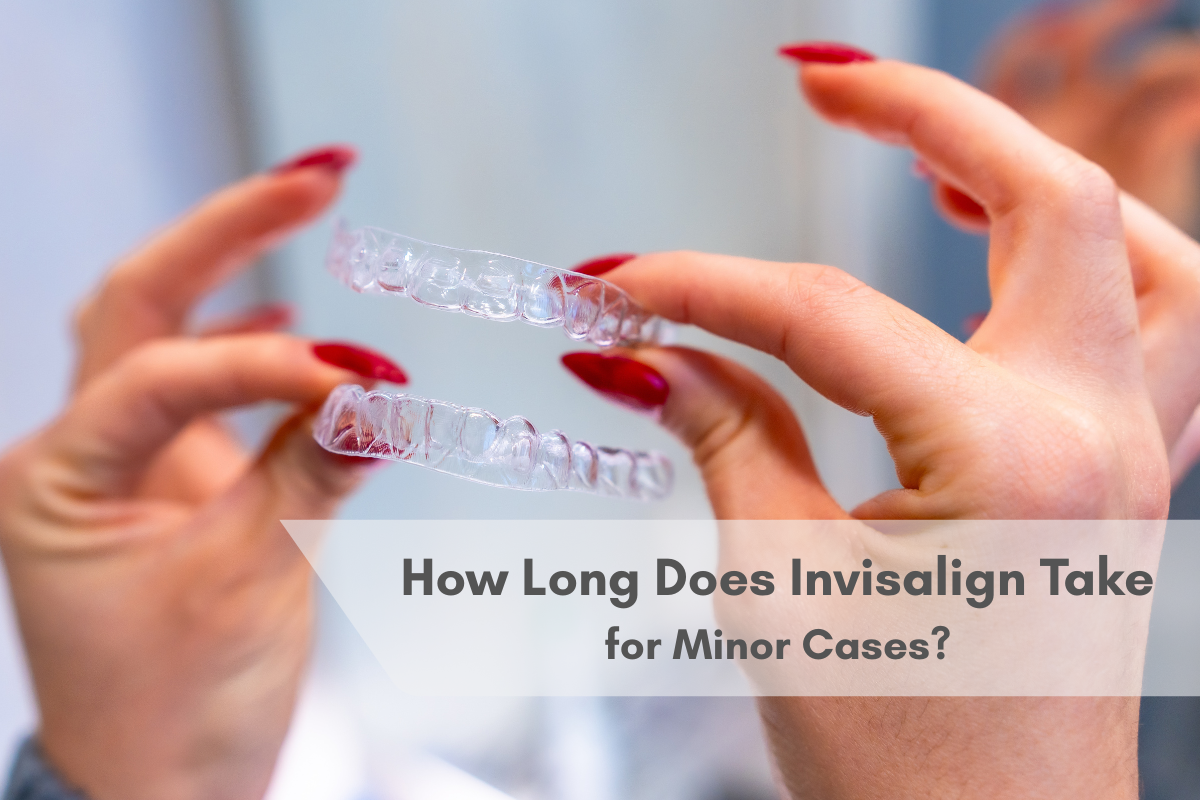
Around Omaha neighborhoods like Dundee, Aksarben, and Millard, we regularly meet patients who assume minor alignment issues can be corrected in just a few weeks. The expectation usually comes from ads promising fast results, but in practice, timelines depend less on how “small” the issue looks and more on how teeth actually move biologically.
At Discover Orthodontics, Dr. Molly Bodendorfer focuses on individualized Invisalign planning based on tooth movement patterns, bite dynamics, and patient compliance. Her approach prioritizes predictable, efficient outcomes rather than overly aggressive timelines that lead to refinements later. Ready to find out how long your Invisalign treatment will actually take? Our orthodontist evaluates your alignment, bite, and movement patterns to give you a clear, case-specific timeline. Contact today to schedule your consultation and get a plan built around real results, not estimates.
What “Minor Case” Really Means in Orthodontics
Patients often label their case as minor based on appearance. Clinically, that definition is narrower.
A true minor case usually involves:
- Mild crowding or spacing (1 to 3 mm)
- No significant bite issues
- Limited tooth rotation or tipping
- No need for extractions or attachments in complex areas
Here is where confusion starts. A case that looks minor in the mirror may still involve bite correction or root movement, which immediately increases treatment time.
Typical Invisalign Timeline for Minor Cases
For genuinely minor cases, most timelines fall within:
- 3 to 6 months for very mild spacing or relapse after braces
- 6 to 9 months for mild crowding or alignment involving multiple teeth
- 9 to 12 months if small bite adjustments are required
Patients exploring subtle alignment correction with Invisalign in Omaha for minor crowding are often surprised that even small shifts require staged movement. Teeth do not slide instantly. They remodel through controlled bone response, which takes time regardless of case size.
Why Some “Minor” Cases Take Longer Than Expected
This is one of the most common disconnects we see in consultations.
1. Hidden Bite Issues
Even slight overbite or crossbite corrections extend timelines. Aligning front teeth without stabilizing the bite leads to relapse, so orthodontists intentionally slow the process.
2. Tooth Movement Type
Tipping a tooth is faster than rotating it. Rotations, even small ones, require more aligners and tracking precision.
3. Refinements Are More Common Than Patients Think
Many minor cases still need a second round of aligners. This is not failure. It is controlled fine-tuning.
4. Compliance Gaps
Patients who wear aligners 18 to 20 hours instead of the recommended 22 hours often add weeks or months to treatment. Small inconsistencies compound over time.
Real-World Patient Patterns We See
In clinical settings, patterns repeat:
- Patients remove aligners frequently for social events
- They delay switching trays due to discomfort
- They assume “close enough” means treatment is done
This behavior is the biggest reason minor cases extend beyond initial estimates.
For patients considering short-term Invisalign treatment in Omaha for mild spacing issues, consistency matters more than case complexity. A perfectly designed plan can still fail if aligners are not worn as prescribed.
When a 6-Month Timeline Is Realistic
A 6-month treatment window is achievable, but only under specific conditions:
- Spacing instead of crowding
- No bite correction needed
- Minimal tooth rotation
- High compliance (22 hours per day)
- No missed aligner changes
If even one of these factors changes, timelines typically extend.
Common Misconceptions That Lead to Frustration
“Minor means fast”
Not necessarily. Movement biology is the limiting factor, not case size.
“Fewer trays = faster results”
Tray count reflects staging, not speed. Each tray still requires time for safe tooth movement.
“I can speed it up by changing trays early”
This often backfires. Teeth need time to adapt before progressing.
“Refinements mean something went wrong”
Refinements are standard. They improve precision, especially in visible areas.
Early Signs Your Timeline May Be Extending
Patients rarely notice delays until they are significant. Watch for:
- Aligners feeling tight beyond expected days
- Teeth not fully tracking within trays
- Visible gaps between aligner and tooth surface
- Repeated need to wear trays longer than scheduled
These are indicators that treatment is not progressing as planned.
The Role of Attachments and Adjustments
Many patients assume attachments mean a more severe case. In reality, they often make minor cases more efficient.
Attachments:
- Improve grip for precise movements
- Reduce the need for extended refinements
- Help control rotations and root positioning
Skipping them for aesthetic reasons can actually slow treatment.
Edge Cases That Change Timelines Completely
Even small alignment concerns can become complex when:
- There is a prior orthodontic relapse
- Teeth have shifted due to grinding or clenching
- Bone density varies between areas
- Crowns or restorations affect the aligner grip
These are not obvious during self-assessment but become clear during digital scans and treatment planning.
Get a Clear Timeline for Your Case
If you are considering Invisalign for a minor alignment issue, the most important step is getting an accurate diagnosis. At Discover Orthodontics, Dr. Molly Bodendorfer uses detailed digital scans and case-specific planning to determine realistic timelines, not generic estimates.
Schedule a consultation today to understand exactly how long your treatment will take and what factors could affect it. Call Discover Orthodontics to get started with a plan tailored to your smile.
When it comes to minor alignment issues, the timeline is less about how simple the case looks and more about how teeth need to move safely and predictably. We focus on setting realistic expectations, identifying hidden factors early, and guiding patients through consistent wear so results stay on track without unnecessary delays.
FAQs: Invisalign for Minor Cases
How do I know if my case is truly minor?
Only a clinical evaluation with digital scans can confirm this. Visual appearance alone is not reliable.
Can Invisalign fix minor issues faster than braces?
In many cases, yes, but only if compliance is high and no bite correction is needed.
Do I always need refinements for minor cases?
Not always, but they are common and expected for precise final alignment.
What happens if I wear aligners for less than 22 hours a day?
Treatment slows down, and you may need additional trays or refinements.
Are minor cases less expensive?
Generally, yes, but cost also depends on treatment duration and complexity, not just severity.
Can I switch trays earlier to finish faster?
No. Moving too quickly can lead to poor tracking and a longer overall treatment.
Do attachments make treatment faster?
Yes, in many cases, they improve efficiency and reduce delays.
Is it okay to pause treatment for travel or events?
Frequent pauses disrupt progress and can significantly extend timelines.