Text: 402-773-6276



Can Invisalign Fix an Underbite? Treatment Options Explained

Many people in Omaha, Nebraska, notice bite issues gradually. You may look in the mirror and realize your lower teeth extend slightly in front of the upper teeth, or perhaps chewing feels uneven and uncomfortable. For some, this concern appears during teenage years, while others recognize it later in adulthood when jaw strain, tooth wear, or speech difficulties become more noticeable.
Patients across the Omaha community often ask whether modern orthodontic solutions can correct this issue without the appearance of metal braces. Clear aligner therapy has become a common option for people looking for a discreet way to address bite alignment concerns. Understanding how these aligners work and whether they can address an underbite helps patients make informed decisions about their orthodontic care.
Ready to Improve Your Bite Alignment? Schedule Your Visit Today!
At Discover Orthodontics, treatment begins with a consultation where Dr. Molly Bodendorfer evaluates bite alignment and jaw position using digital scans and diagnostic images. If clear aligners are appropriate, a 3D treatment plan is created to guide gradual tooth movement through a series of custom aligners worn in stages.
Patients progress through each aligner, while periodic visits allow the team to monitor changes and ensure treatment stays on track. Schedule a consultation with Discover Orthodontics to discuss your bite concerns and learn whether clear aligners may be a suitable option for you.
What Is an Underbite?
An underbite occurs when the lower teeth sit in front of the upper teeth when the mouth closes. In orthodontics, this is classified as a Class III malocclusion.
This type of bite misalignment may develop because of several factors, including:
- Jaw growth differences between the upper and lower jaw
- Genetic influences within families
- Childhood habits affecting jaw development
- Early tooth loss or improper tooth eruption
The severity of an underbite varies widely. Some cases involve only minor tooth positioning issues, while others involve more significant jaw discrepancies.
Can Invisalign Fix Underbite?
Yes, Invisalign can correct certain types of underbite, particularly when the issue is caused primarily by tooth positioning rather than significant skeletal jaw differences.
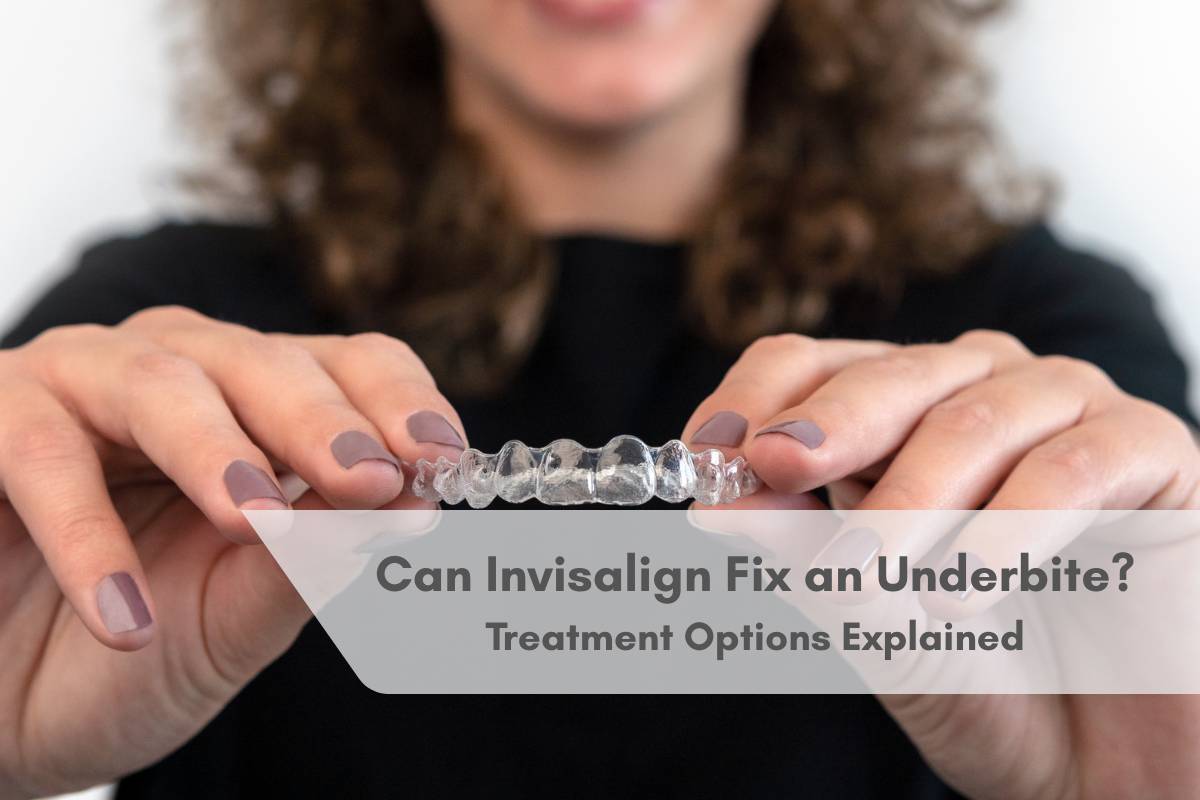
Clear aligners gradually shift teeth into more favorable positions using a series of custom-made trays. Each aligner applies controlled pressure to guide teeth toward improved alignment.
However, the effectiveness depends on the severity and cause of the underbite.
Clear aligners may be appropriate when:
- The underbite is mild to moderate
- The issue involves tooth positioning rather than jaw structure
- The patient has healthy gums and supporting bone
In more complex cases involving significant jaw discrepancies, orthodontists may recommend combining aligners with other orthodontic approaches.
During consultation, orthodontists evaluate digital scans, bite analysis, and facial structure to determine whether modern Invisalign treatment in Omaha may be an appropriate solution.
How Invisalign Works for Underbite Correction
Clear aligners correct bite alignment through incremental tooth movement.
Treatment typically includes several important steps:
1. Digital Treatment Planning
Advanced 3D scans map tooth movement step-by-step, allowing orthodontists to visualize how the bite will change throughout treatment.
2. Custom Aligner Series
Patients wear a series of aligners, each designed to move teeth slightly closer to their final position.
3. Attachments and Elastics
In some cases, small tooth-colored attachments or elastics may be used to guide complex tooth movements.
4. Gradual Bite Adjustment
As teeth move, the relationship between the upper and lower arches improves, helping correct the underbite over time.
Many patients appreciate the convenience of clear aligner therapy for bite correction in Omaha, since the trays are removable for eating and oral hygiene.
When Invisalign May Not Be Enough
While clear aligners can address many orthodontic concerns, severe underbites caused by significant jaw differences may require additional treatment approaches.
Situations where alternative or combined treatment may be recommended include:
- Large skeletal jaw discrepancies
- Significant facial profile imbalance
- Severe functional bite problems
Possible alternatives include:
- Orthodontic treatment combined with elastics
- Temporary anchorage devices (TADs)
- Orthognathic (jaw) surgery in complex cases
Orthodontic evaluation helps determine the most appropriate path forward.
Benefits of Invisalign for Bite Alignment
For many patients, clear aligners offer several practical advantages when correcting bite issues.
Discreet Appearance
The transparent aligners allow patients to undergo orthodontic treatment with minimal visibility.
Comfortable Materials
Smooth aligner trays reduce irritation often associated with metal brackets and wires.
Removable Convenience
Aligners can be removed for meals, brushing, and flossing.
Predictable Treatment Planning
Digital simulations help patients understand expected tooth movement and treatment progress.
These benefits have contributed to the increasing interest in orthodontic aligners in Omaha among both teens and adults seeking bite correction.
How Long Does Treatment Take?
The duration of clear aligner treatment varies based on the complexity of the underbite.
Factors that influence treatment length include:
- Severity of tooth misalignment
- Jaw relationship
- Patient consistency with wearing aligners
- Additional orthodontic tools used during treatment
Many patients wear aligners for 20–22 hours per day and switch trays every one to two weeks as directed by their orthodontist.
Regular follow-up visits help ensure the treatment plan progresses as expected.
What Our Patients Say
“Amazing experience, didn’t know if I really wanted braces or Invisalign going in but by the time I left, they made me want them! I was recommended to this place and will definitely recommend this to someone else! Thanks Discover!” – Jimmy King
If you’re considering treatment, take a moment to explore our Google Reviews from patients who have visited Discover Orthodontics.
Understanding bite alignment is the first step toward improving oral function and long-term dental health. If you are wondering whether clear aligners may help correct an underbite, a professional evaluation with us can provide clarity and guidance.
Our team at Discover Orthodontics, led by orthodontist Dr. Molly Bodendorfer, welcomes patients who want to learn more about their orthodontic options. Schedule a consultation or visit our dental offices in West Omaha and Midtown to discuss your concerns, review your bite alignment, and explore whether Invisalign treatment may be an appropriate option for you.
FAQs
Is Invisalign suitable for adults with an underbite?
Yes. Many adults pursue orthodontic treatment later in life to correct bite issues. Clear aligners can address mild to moderate underbites depending on tooth alignment and jaw structure.
Does Invisalign move the jaw or just the teeth?
Invisalign primarily moves teeth. However, attachments, elastics, and controlled tooth movement can improve how the upper and lower teeth fit together.
Will correcting an underbite improve chewing?
Improving bite alignment often helps distribute chewing forces more evenly across the teeth, which can improve comfort and function.
Do underbites always require surgery?
Not always. Mild to moderate underbites caused by tooth positioning may be corrected through orthodontic treatment alone.
How do I know if Invisalign will work for my bite?
A consultation with our orthodontist is necessary. Digital scans and bite analysis determine whether clear aligners may address the specific alignment concern.