Text: 402-773-6276



Is There Really a 30-Minute Rule With Invisalign? What Patients Need to Know

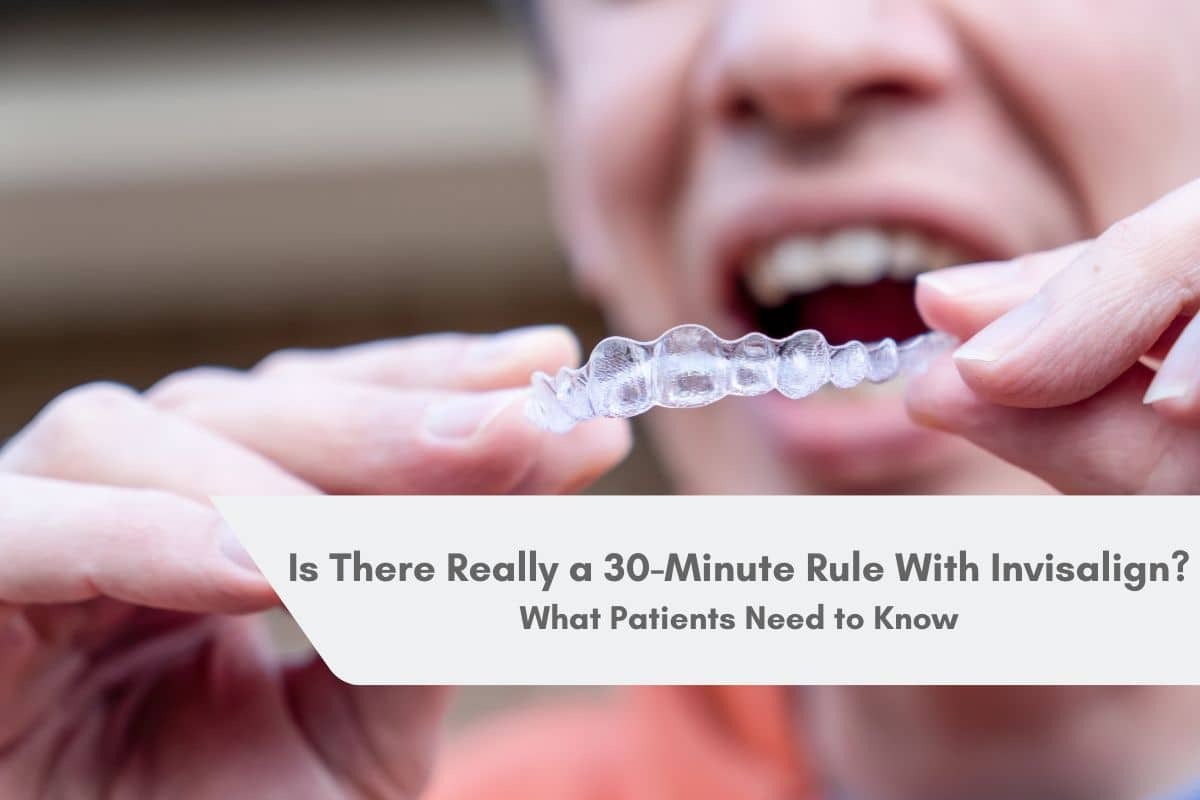
Patients in Omaha, Elkhorn, Bellevue, and surrounding Nebraska communities often hear the same concern during aligner treatment: “Am I taking too long to put my Invisalign back in after eating?” This usually stems from the widely discussed “30-minute rule,” which circulates online and among patients but is frequently misunderstood. At clinics like Discover Orthodontics, this question comes up because patients are trying to balance normal eating habits with strict aligner discipline, without knowing what actually matters clinically.
The short answer: there is no formal, universal “30-minute rule” written into Invisalign treatment protocols. What exists instead is a practical behavioral guideline designed to protect total daily wear time and prevent unnecessary delays in tooth movement.
About the Author
Dr. Molly Bodendorfer is focused on evidence-based orthodontic care using clear aligner systems and braces. Her approach emphasizes predictable tooth movement, patient compliance education, and minimizing treatment delays through realistic daily habits patients can actually follow.
Where the “30-Minute Rule” Actually Comes From
The so-called 30-minute rule is not an official clinical requirement. It is a compliance benchmark that has developed from orthodontic practice patterns.
In simple terms, it refers to how long your aligners can realistically stay out of your mouth during meals, snacks, and oral hygiene without meaningfully impacting treatment progress.
The real clinical principle is this: Invisalign works best when aligners are worn 20 to 22 hours per day. That leaves a limited window for eating and cleaning. If patients repeatedly extend that window, tooth movement slows down, and aligners may feel tighter or stop fitting properly.
So when orthodontists mention “don’t exceed 30 minutes,” they are not enforcing a strict timer. They are reinforcing a behavioral ceiling that helps patients stay within their required daily wear time.
What Actually Matters More Than Timing Alone
In practice, the exact number of minutes is less important than the total cumulative wear time.
Patients undergoing Invisalign treatment Omaha often assume that small delays after meals are harmless. While occasional variation is acceptable, consistent extension beyond reasonable limits reduces effective aligner force on teeth.
What truly drives outcomes is:
- Consistent 20–22 hour daily wear
- Minimal prolonged removal periods
- Immediate reinsertion after eating once cleaning is reasonably completed
- Avoiding repeated “forgetting to put trays back in”
Orthodontists prioritize consistency over precision timing. A patient who removes aligners for 40 minutes once is less concerning than someone who routinely leaves them out for 2–3 hours daily.
Why Orthodontists Emphasize Quick Reinsertion
The biology behind tooth movement is time-sensitive. Aligners apply controlled pressure to periodontal ligaments, and that force needs to remain relatively continuous to be effective.
When trays are removed for extended periods:
- Teeth begin to rebound slightly toward their original position
- The next reinsertion feels tighter and more uncomfortable
- Micro-movements become inconsistent
- Cumulative daily force decreases
This is why clinicians often stress the idea of “get them back in quickly,” not because 31 minutes is dangerous, but because repeated delays create a pattern that undermines the treatment plan.
At Discover Orthodontics, patients are often coached to think in terms of habit loops rather than strict timers: eat, clean, reinsert, repeat.
Common Patient Behavior That Creates Problems
Most Invisalign delays are not intentional. They come from predictable real-world habits:
- Long social meals where aligners are removed “temporarily” but forgotten
- Frequent snacking without reinsertion in between
- Overcomplicated cleaning routines after every meal
- Leaving trays out during coffee breaks or work meetings
- Misunderstanding that short breaks “don’t matter”
These patterns gradually reduce total wear time far more than patients realize. Even small daily losses accumulate across weeks, affecting how teeth track against planned movement.
New to Invisalign? Your First Week Sets the Tone
Many of these habits develop during the first few days of wearing aligners, when patients are still adjusting to a new routine. Building consistent habits early, such as putting your aligners back in immediately after meals and keeping track of your daily wear time, can make the rest of your treatment much smoother. If you’re just getting started, our guide on what to expect during your first week with Invisalign explains the common adjustments, practical tips, and what you can expect as your mouth adapts to clear aligners.
When the Timing Actually Becomes Clinically Relevant
There are situations where extended removal becomes more significant:
- Early stages of aligner treatment when teeth are most responsive
- Complex tooth rotations or bite corrections
- Patients who are already borderline on wear compliance
- Switching to a new aligner tray and experiencing tightness
In these cases, even small deviations can lead to tracking issues, where aligners stop fitting snugly. That is usually when orthodontists intervene, not because of a single long meal break, but because of a repeated behavioral pattern.
Patients undergoing Invisalign treatment are often surprised that compliance matters more in the first few weeks than later stages, because early movement sets the foundation for the entire sequence.
Misconceptions That Lead to Anxiety
A major issue with the “30-minute rule” concept is that it creates unnecessary stress. Patients often believe:
- If they exceed 30 minutes once, treatment is compromised
- They must eat extremely fast or risk failure
- Any deviation resets progress
None of these are accurate.
Orthodontic treatment is designed with flexibility in mind. What matters is overall adherence across days and weeks, not isolated events.
Another misconception is that aligners “stop working” immediately after removal. In reality, teeth shift slowly, and the system tolerates short interruptions as long as they are not habitual.
Practical Reality of Daily Invisalign Wear
Most successful patients develop a simple routine:
- Remove aligners only for meals and brushing
- Limit grazing or constant snacking
- Reinstate trays as soon as hygiene is complete
- Keep a travel case to avoid loss or delay
- Maintain awareness of cumulative wear time
This is where the “30-minute rule” becomes useful as a mental checkpoint, not a strict clinical law.
Stay On Track With Your Invisalign Treatment
If you are unsure whether your aligner habits are supporting your treatment goals, the team at Discover Orthodontics can evaluate your progress and help refine your daily routine for better tracking and comfort. Contact our team to ensure your Invisalign plan stays predictable and on schedule.
We see this concern frequently in daily orthodontic care, especially among new aligner patients trying to balance lifestyle and treatment discipline. The key takeaway is not about chasing a strict timer, but about maintaining consistent wear habits that keep tooth movement steady and predictable.
Frequently Asked Questions
1. Is there an actual medical 30-minute rule for Invisalign?
No. It is an informal guideline used to help patients stay within daily wear requirements.
2. What is the ideal daily wear time for Invisalign?
Most orthodontists recommend 20 to 22 hours per day for optimal results.
3. What happens if I leave aligners out for over 30 minutes?
Occasionally, nothing significant. Repeated extended removal can slow progress and affect fit.
4. Do I need to rush eating because of Invisalign?
No. You should eat normally, but avoid unnecessarily long breaks with trays out.
5. Why do my aligners feel tight after meals?
Teeth begin to rebound slightly when aligners are out, making reinsertion feel tighter.
6. Can frequent snacking affect treatment?
Yes. It increases total removal time and reduces effective wear duration.
7. What should I do if I forget to put aligners back in?
Reinsert them as soon as you remember and continue your normal schedule.
8. Does poor compliance delay treatment?
Yes. Reduced wear time is one of the most common causes of extended Invisalign timelines.