Text: 402-773-6276



How Invisalign Moves Teeth Downward: A Step-by-Step Guide for Omaha Patients

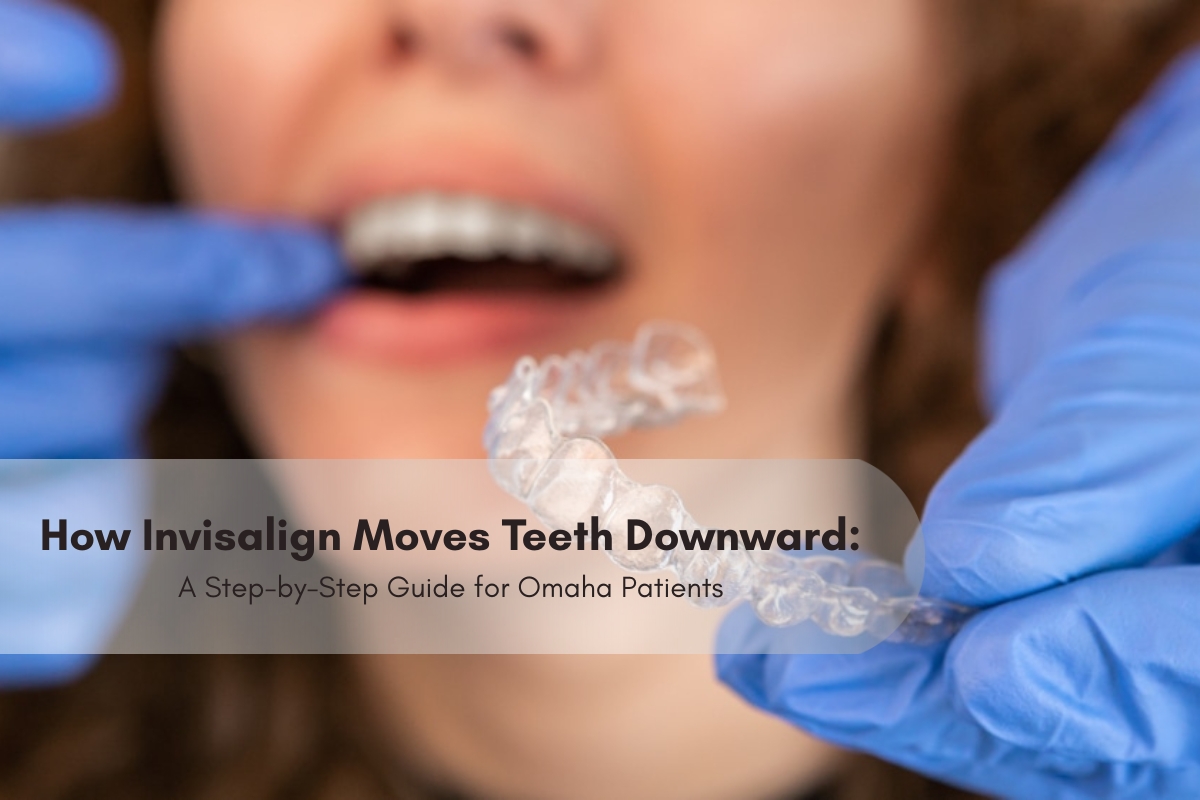
When people think of clear aligners, they often picture perfectly aligned front teeth. But many don’t realize that Invisalign isn’t just about straightening—it’s also capable of complex movements like pulling teeth down to correct vertical alignment issues. This guide explores how Invisalign works to move teeth downward, especially for teens and adults looking for discreet orthodontic care in Omaha.
Understanding Vertical Tooth Movement with Clear Aligners
In orthodontics, moving a tooth downward is known as extrusion. This is often necessary when a tooth hasn’t erupted fully or appears shorter than its neighbors. Uneven tooth height can affect both function and aesthetics, making the smile appear unbalanced.
Invisalign, when used with proper planning and technique, can address this issue with customized trays and attachments that apply targeted force in a downward direction.
Can Invisalign Pull Teeth Down?
Yes, Invisalign can pull teeth down in many mild to moderate cases. Using a combination of precision-shaped aligner trays and small attachments bonded to your teeth, Invisalign creates gradual, controlled pressure that helps extrude teeth safely over time.
Pro Tip: For patients in Omaha seeking advanced Invisalign treatment, it’s essential to choose a provider with experience in handling vertical movements—not all cases are eligible without proper planning.
Step-by-Step: How Invisalign Moves Teeth Downward
1. Digital Treatment Planning
It all starts with a 3D scan of your teeth. Omaha orthodontists use this to map out how each tooth should move, including any vertical adjustments needed. This blueprint guides the design of each aligner tray.
2. Custom Attachments Are Placed
Small tooth-colored buttons (attachments) may be placed on specific teeth. These act as anchors, helping the aligner grip and direct movement more effectively.
3. Progressive Aligner Changes
Each set of aligners is worn for about one to two weeks. With each new tray, slight pressure is applied to the tooth that needs to move downward. Over time, this guides the tooth into proper vertical alignment.
4. Monitoring and Adjustments
Regular check-ins with your provider ensure the teeth are tracking correctly. If a tooth isn’t moving as expected, adjustments can be made by adding elastics or reshaping trays to increase vertical force.
5. Retention and Final Results
Once the treatment ends, a retainer helps maintain the new position. Patients who’ve had vertical corrections benefit greatly from this final step to avoid relapse.
Why Omaha Teens and Adults Choose Invisalign for Vertical Issues
Orthodontic needs go beyond just crowding or spacing. Teens, especially, may have underdeveloped teeth or uneven eruption that makes their smile appear inconsistent. Invisalign treatment plans available locally now address more than just horizontal alignment—they can also manage issues like:
- Slight open bites
- Uneven front tooth height
- Mild vertical bite correction
Many Omaha families prefer aligners over traditional braces because they are:
- Nearly invisible
- Easy to remove for sports, school events, or photos
Customized for growing mouths (especially helpful in teen orthodontics)
Addressing Common Questions
How long does it take for Invisalign to pull a tooth down?
Typically, vertical movement can begin to show in 2 to 4 months, but it depends on the tooth’s current position and your body’s response. The entire process may take 6–12 months for visible correction, though minor shifts can happen sooner.
Is pulling a tooth down painful?
Most patients feel mild pressure, especially when switching to a new tray. However, the discomfort is temporary and manageable, especially compared to traditional bracket-based systems.
Expert Tips for Faster Adjustment and Better Results
- Wear aligners 20–22 hours per day for consistent force application.
- Follow your provider’s instructions on tray changes and check-ups.
- Stay hydrated—dry mouth can make wearing aligners uncomfortable and may impact fit.
Keep aligners clean and seated properly, especially when vertical movement is planned.
Ready to Transform Your Smile?
If you’re exploring clear aligner treatment in Omaha—whether for yourself or your teen—and want to address more than just crooked teeth, Invisalign might be the solution. It’s discreet, effective, and capable of handling vertical movement in the right hands.
Ready to get started?
Schedule a consultation today with a certified Invisalign provider in Omaha to find out how aligners can improve your smile from every angle—up, down, and everything in between.