Text: 402-773-6276



Are Fashion Braces Safe? What Orthodontists Say About the Trend

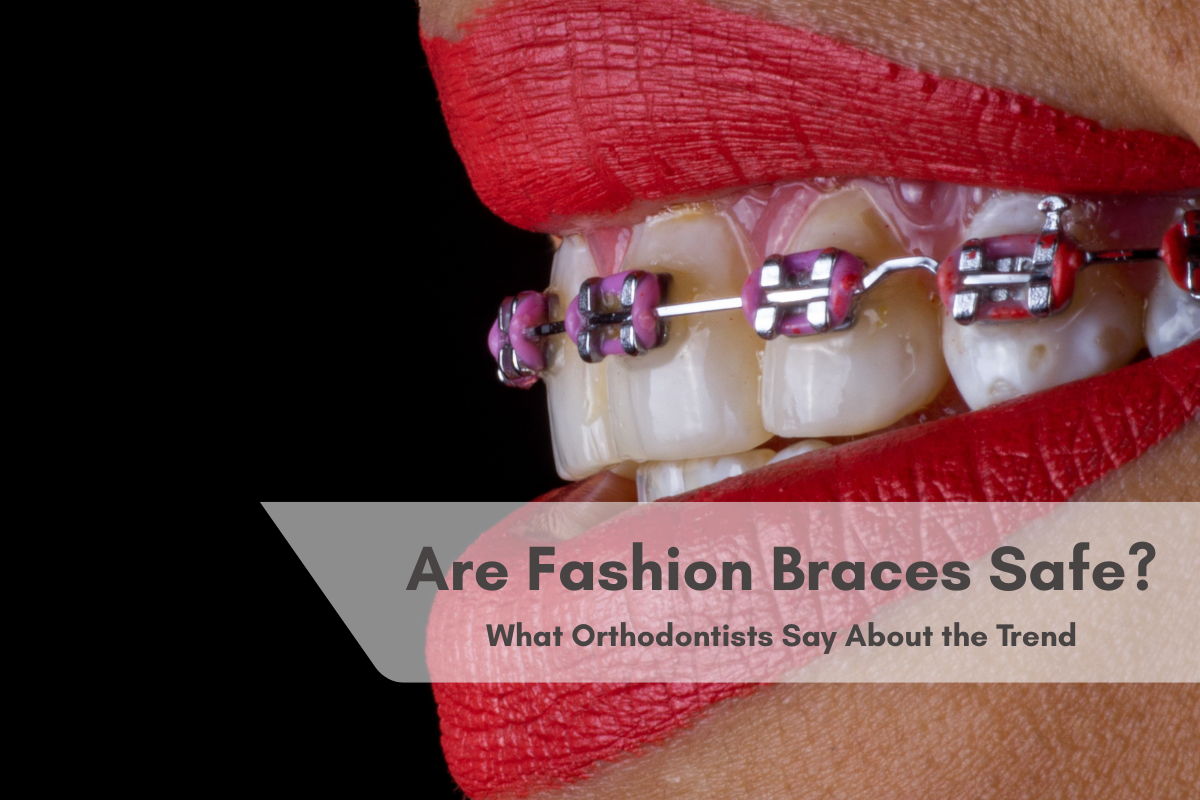
Scrolling through TikTok or Instagram, it is easy to come across videos showing colorful brackets, decorative wires, or “fake braces” marketed as fashion accessories. In Omaha and nearby communities like Elkhorn, Millard, Papillion, and Bennington, orthodontists are seeing more patients, especially teens and young adults, asking whether fashion braces are harmless or secretly dangerous. Some people are simply curious about the trend. Others arrive concerned after buying decorative brackets online or hearing about friends trying them. The biggest misunderstanding? Many people assume anything that looks like braces must work like braces.
At Discover Orthodontics, Dr. Molly Bodendorfer focuses on helping patients understand orthodontic treatment without pressure or confusion. Her approach emphasizes education, personalized treatment planning, and long-term oral health so patients understand not just what treatment is recommended, but why it matters for comfort, bite function, and confidence. Contact us to schedule a consultation and learn more about your orthodontic options.
Fashion Braces Are Not the Same as Orthodontic Treatment
One of the biggest sources of confusion is terminology.
“Fashion braces” generally refer to decorative or imitation braces worn for appearance rather than tooth movement. Sometimes they involve stick-on accessories that resemble brackets. In riskier situations, they include brackets and wires attached to teeth without an orthodontic diagnosis or supervision.
This matters because real braces are medical devices. Orthodontists do not simply place brackets to make teeth look different. Every wire, bracket position, and adjustment is planned around bite pressure, jaw alignment, spacing, crowding, and long-term stability.
Patients exploring braces in Omaha often assume treatment starts with brackets alone, but orthodontists spend considerable time evaluating how teeth move together before any appliance is placed. Even small changes can affect chewing comfort, speech patterns, and gum health.
Why Orthodontists Tend to Be Concerned About Fashion Braces
The concern is not about style or self-expression. Orthodontists understand that colorful bands and personalization are part of what many patients enjoy about treatment.
The problem begins when braces are treated like jewelry instead of medical care.
In some online trends, fashion braces are promoted as harmless cosmetic accessories that can be purchased cheaply or installed outside a professional setting. That creates risk because teeth are not supposed to move randomly.
Orthodontists commonly explain it this way: pressure changes tooth position. Even unintended pressure can shift teeth in ways that create bite imbalance, crowding, or discomfort.
A bracket placed incorrectly may not seem serious at first. But over time, uneven force can affect neighboring teeth, chewing patterns, or jaw comfort.
Dr. Bodendorfer and many orthodontists see a recurring pattern in patient conversations: someone assumes “it is only cosmetic,” only to realize later that irritation, looseness, or bite discomfort has developed.
The Hidden Risks People Often Do Not Expect
Many people assume the biggest concern is whether fashion braces “work.” Orthodontists usually worry more about unintended consequences.
Gum irritation and trapped bacteria
Decorative materials attached improperly can trap plaque around teeth and gums. If cleaning becomes difficult, irritation and inflammation may follow.
Patients sometimes notice bleeding while brushing and assume they are brushing too hard. In reality, the problem may be a poor fit or materials creating areas where bacteria accumulate more easily.
Teeth moving unpredictably
This surprises many people.
Some fashion braces are purely decorative, but others may create pressure, intentionally or unintentionally. Teeth do not always move in a predictable direction without treatment planning.
Orthodontists occasionally see cases where spacing worsens or alignment shifts because pressure was applied unevenly.
Bite changes
A person may not notice subtle bite changes immediately.
Instead, warning signs show up gradually: difficulty chewing, teeth no longer fitting together comfortably, jaw soreness, or increased sensitivity while eating.
Problems with future treatment
Another overlooked issue is how improper movement may complicate later orthodontic care.
If teeth shift unpredictably, treatment planning sometimes becomes more complicated than it would have been initially.
That does not mean correction is impossible. It simply may take longer or require a different strategy.
Why Teenagers Are Especially Vulnerable to the Trend
Orthodontists frequently notice fashion braces gaining popularity among younger audiences.
For some teens, braces have shifted culturally from something to hide to something associated with style, self-expression, or even status. Social media trends can make decorative braces seem harmless, especially when influencers frame them as affordable alternatives.
Parents often ask a practical question: “If my child only wants the look, is it still risky?”
The answer depends on what is being used.
Simple decorative stickers are very different from bonded brackets or wires attached to teeth. Orthodontists become more concerned anytime materials are placed directly on teeth in ways that mimic actual orthodontic treatment.
The challenge is that teens do not always recognize warning signs early. Mild discomfort may be dismissed as “normal,” even when irritation or pressure is becoming problematic.
What Orthodontists Usually Recommend Instead
Most orthodontists are not dismissive when patients ask about fashion braces. Curiosity is normal.
Instead, the conversation usually shifts toward goals.
Some patients like the aesthetic of braces and want personalization. Others are wondering whether they actually need orthodontic treatment but feel uncertain about cost or commitment.
For patients considering braces, consultations often begin with simple questions:
- Are teeth crowded or shifting?
- Is chewing uncomfortable?
- Has spacing changed recently?
- Does the bite feel uneven?
- Are cosmetic concerns affecting confidence?
Sometimes people discover they do not need treatment right now. Other times, they learn that mild concerns could become more difficult to address later.
Patients are often surprised to learn that modern braces offer customization too, including colored ties and different treatment styles, while still being medically supervised.
A Common Misconception Orthodontists Hear
One myth shows up repeatedly:
“If it does not hurt, it must be safe.”
Orthodontists disagree with that assumption.
Many bite changes happen gradually. Early problems may not feel dramatic. A patient may only notice something feels “off” months later.
That is why professional orthodontic care includes monitoring. Teeth are constantly responding to pressure, and small adjustments are made intentionally to keep movement healthy and predictable.
When It Makes Sense to Ask an Orthodontist
You do not need an emergency to schedule an orthodontic evaluation.
It may be worth asking questions if:
- Teeth feel different after wearing decorative dental accessories
- Biting feels uneven or uncomfortable
- Gums become irritated around brackets or attachments
- Teeth appear to shift unexpectedly
- You are unsure whether alignment concerns justify treatment
At Discover Orthodontics, patients often come in simply wanting clarity. A consultation can help separate internet myths from what is actually happening in the mouth.
Curious About Whether Real Orthodontic Treatment Makes Sense?
At Discover Orthodontics, Dr. Molly Bodendorfer helps patients understand their options without pressure or confusion. Whether you are curious about alignment changes, considering braces, or simply wondering whether social media trends are safe, visiting our orthodontic practice in Omaha, NE, can help you get clear answers tailored to your smile. A consultation is an opportunity to better understand your bite, alignment, and long-term oral health so you can make informed decisions with confidence.
Trends come and go, but healthy tooth movement requires careful planning. While fashion braces may seem harmless online, the reality is often more complicated than it appears. If you have questions about changing teeth, bite concerns, or whether treatment makes sense, we welcome you to visit our orthodontic practice in Omaha, NE. We believe informed decisions matter, especially when small choices today can affect comfort, confidence, and long-term oral health tomorrow.
FAQs
Can fashion braces move teeth accidentally?
Yes, depending on how they are made or attached. Orthodontists worry when brackets or wires apply unintended pressure because teeth can shift unpredictably without a treatment plan.
Are fashion braces dangerous for teenagers?
They can be, especially if they involve bonded brackets or pressure on teeth. Teens may overlook early warning signs or underestimate how quickly oral irritation can worsen.
What are the warning signs that fashion braces may be causing problems?
Pain while biting, gum swelling, irritation, loose-feeling teeth, difficulty chewing, or changes in how teeth fit together are all reasons to get evaluated.
Do fashion braces actually straighten teeth?
Not safely or predictably. Real orthodontic treatment is carefully planned around tooth movement, jaw position, and bite balance.
Are decorative braces from social media safe?
Safety depends on what is being sold. Cosmetic stickers are very different from bonded brackets or wires that imitate treatment. Orthodontists generally recommend caution.
Can fake braces make future orthodontic treatment harder?
In some cases, yes. Unplanned tooth movement may create complications that affect treatment timing or complexity later.
What is a safer alternative to fashion braces?
If someone likes the look of braces or is curious about alignment, an orthodontic consultation is the safest place to start.
Should I see an orthodontist even if nothing hurts?
Possibly. Not every orthodontic problem causes immediate discomfort, and small issues are often easier to manage early.