Text: 402-773-6276



Can Invisalign Fix an Overbite?

Overbites are a common dental issue that many people face. They occur when the upper front teeth overlap the lower front teeth significantly. Traditionally, braces have been the go-to solution for correcting overbites, but with advancements in orthodontics, Invisalign has become a popular alternative. Invisalign offers a more discreet and comfortable way to straighten teeth and correct bite issues. But can Invisalign fix an overbite effectively? Let’s explore how Invisalign works, its benefits, and whether it’s a suitable solution for correcting overbites.
What Is an Overbite?
An overbite, also known as a deep bite, is a type of malocclusion where the upper front teeth excessively overlap the lower front teeth. While some overlap is normal, an overbite becomes problematic when it’s too pronounced. A significant overbite can cause various dental issues, including:
- Jaw pain and discomfort: The misalignment can put extra pressure on the jaw, leading to pain and discomfort.
- Tooth wear and damage: An overbite can cause uneven wear on the teeth, leading to damage over time.
- Gum irritation: The misaligned bite can cause the lower teeth to hit the roof of the mouth, irritating the gums.
- Speech difficulties: In severe cases, an overbite can affect speech patterns.
How Invisalign Works
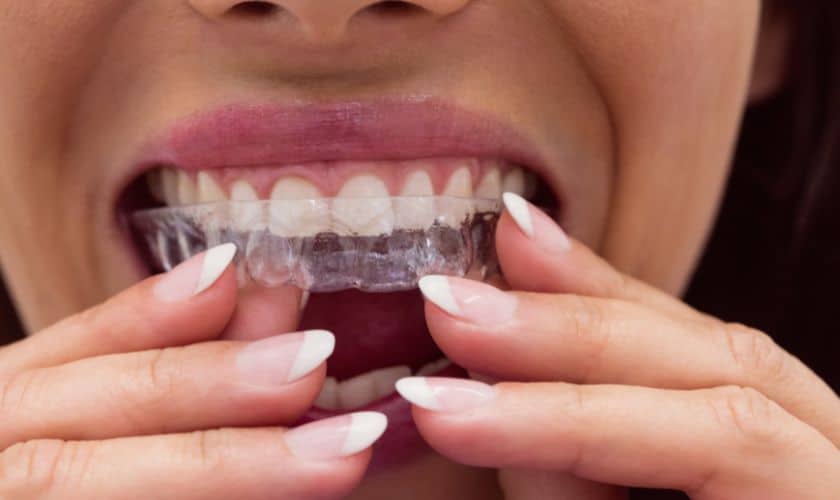
Invisalign is a modern orthodontic treatment that uses a series of clear, removable aligners to straighten teeth. These aligners are custom-made for each patient using 3D imaging technology. The treatment involves wearing a set of aligners for about 1-2 weeks before switching to the next set in the series. Over time, the aligners gradually move the teeth into the desired position.
Benefits of Invisalign
- Discreet appearance: The aligners are clear and nearly invisible, making them a popular choice for adults and teens who want to avoid the look of traditional braces.
- Comfort: Invisalign aligners are made from smooth plastic, reducing the likelihood of irritation to the gums and cheeks.
- Removability: Patients can remove the aligners when eating, drinking, brushing, and flossing, allowing for easier oral hygiene maintenance.
- Custom treatment plan: Invisalign treatment is tailored to each patient’s specific needs, ensuring a personalized approach to straightening teeth and correcting bite issues.
Can Invisalign Fix an Overbite?
Invisalign is effective in treating a wide range of dental issues, including overbites. However, the success of Invisalign in fixing an overbite depends on several factors, such as the severity of the overbite, the patient’s age, and their commitment to following the treatment plan.
Mild to Moderate Overbites
Invisalign is highly effective in correcting mild to moderate overbites. The aligners can gradually move the teeth into a better position, reducing the overlap of the upper and lower teeth. For these cases, Invisalign can be just as effective as traditional braces.
Severe Overbites
For severe overbites, Invisalign can still be an option, but the treatment may be more complex and take longer. In some cases, additional orthodontic tools, such as rubber bands or attachments, may be used in conjunction with the aligners to help correct the bite. However, for extremely severe overbites, traditional braces or even surgical options might be recommended by an orthodontist.
Invisalign for Adults and Teens
Invisalign is an excellent option for both adults and teens. For teens, who are still growing, Invisalign can be particularly effective because their teeth and jaws are more adaptable to movement. Adults with an overbite can also benefit from Invisalign, although the treatment may take longer compared to younger patients.
The Invisalign Treatment Process for Overbites
Consultation and Assessment
The first step in correcting an overbite with Invisalign is a consultation with an orthodontist. During this consultation, the orthodontist will assess the severity of the overbite and determine if Invisalign is the right treatment option. They will take digital scans, photos, and X-rays of the teeth to create a precise 3D model of the patient’s mouth.
Custom Treatment Plan
Based on the 3D model, the orthodontist will develop a custom treatment plan that outlines how the teeth will move during the treatment. This plan will also give patients an idea of how long the treatment will take and what the final results will look like.
Wearing the Aligners
Patients will receive a series of aligners that need to be worn for 20-22 hours a day. Each set of aligners will be worn for about 1-2 weeks before moving on to the next set. The aligners are designed to apply gentle, consistent pressure to gradually move the teeth into the correct position.
Monitoring Progress
Regular check-ups with the orthodontist are necessary to monitor progress and make any adjustments to the treatment plan if needed. These check-ups are typically scheduled every 6-8 weeks.
Refinement Phase
Towards the end of the treatment, some patients may need a refinement phase, where additional aligners are used to fine-tune the positioning of the teeth. This phase ensures that the overbite is fully corrected and that the teeth are in their optimal position.
Post-Treatment: Retainers and Maintaining Results
After completing Invisalign treatment, it’s crucial to wear a retainer to maintain the results. Retainers help keep the teeth in their new position and prevent them from shifting back. Most orthodontists recommend wearing a retainer full-time initially, then gradually reducing wear to just at night.
Invisalign can be an effective solution for fixing an overbite, particularly for mild to moderate cases. It offers a discreet, comfortable, and convenient alternative to traditional braces, making it a popular choice for many patients. However, the success of the treatment depends on the severity of the overbite and the patient’s adherence to the treatment plan.
If you’re considering Invisalign treatment in Omaha for your overbite, the best course of action is to schedule a consultation with an experienced orthodontist. They can assess your specific case, discuss your treatment options, and help you determine if Invisalign is the right choice for you. With the right approach and commitment, Invisalign can help you achieve a healthier, more aligned smile.